Meals on Wheels is the Definition of Community Care
At Meals on Wheels of Loveland and Berthoud, community care is our language. It is something that encompasses everyone involved in our organization including volunteers, staff, donors, and clients as part of a shared system of support. This is what mutual aid looks like in practice.
Mutual aid is a form of community care where people support one another directly, recognizing that everyone has needs and everyone has something to offer. Instead of charity moving from one “giver” to one “receiver,” mutual aid is based on reciprocity, dignity, and shared responsibility. It is built on the idea that communities are strongest when people take care of each other.
Meals on Wheels is often described as a service that delivers meals, but it is also a daily system of mutual aid. Volunteers bring food, but they also receive connection, perspective, and relationships in return. Clients receive nutrition and wellness checks, but they also offer stories, friendship, and a sense of belonging that shapes and sustains the volunteers who visit them.
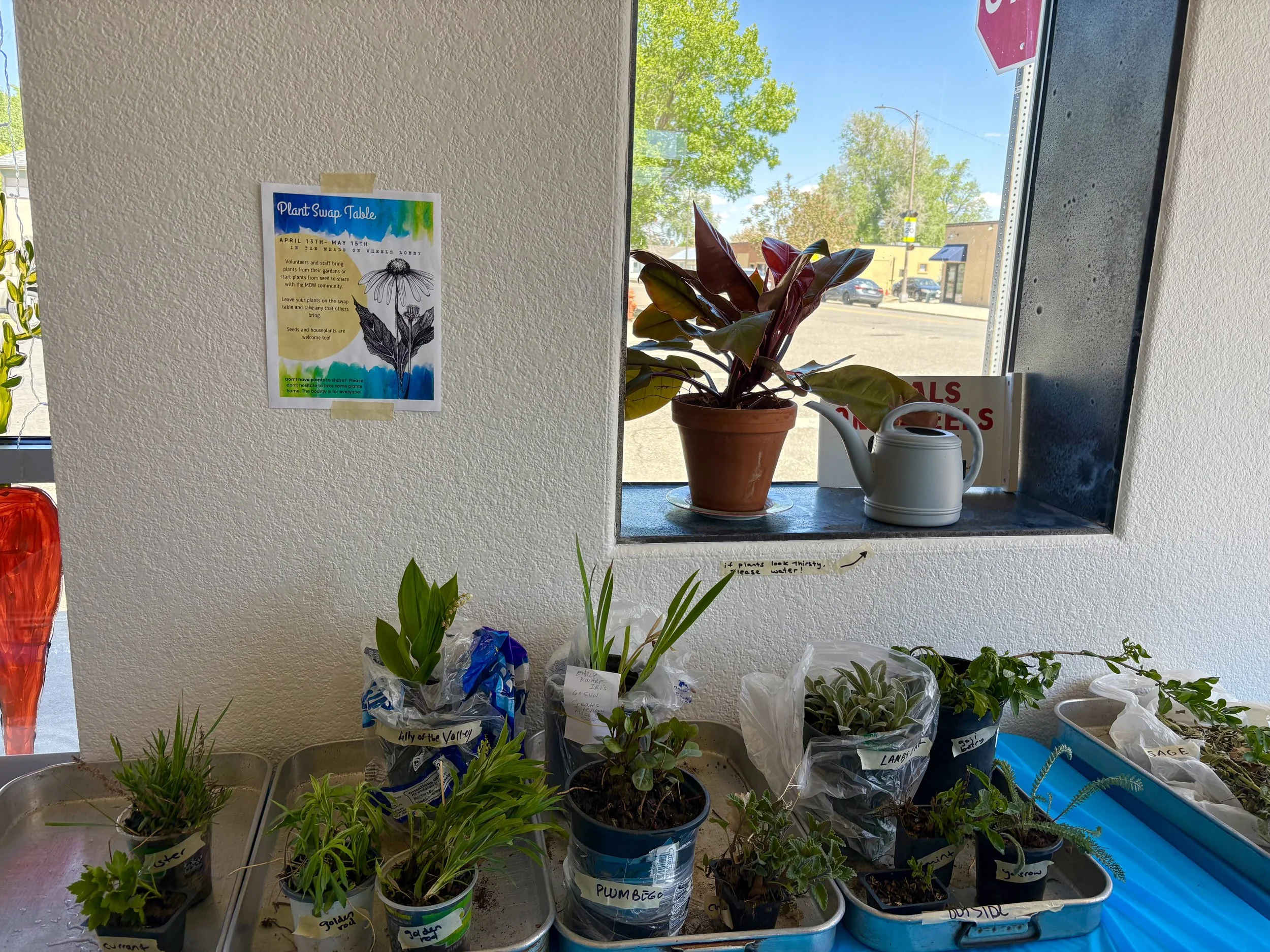
This spirit of exchange is visible even inside our building. In our lobby, we have a simple book swap and seasonal plant swap table created for volunteers and staff. Volunteers bring books they have finished reading and take new ones home. Others bring extra plants, cuttings, or vegetables from their gardens. There is no formal system, no transactions, and no expectation of equal exchange. Instead, there is trust that what is given will circulate back into the community in some form. We see this same principle reflected in our meal program. While there is never a financial obligation for our clients to receive meals, many choose to give back through voluntary contributions and those contributions, along with support from community donations and grants, help ensure that individuals who cannot give financially still receive consistent access to nutritious meals.
What makes this small space meaningful is not the objects themselves, but the culture behind them. A book passed from one volunteer to another might become a shared conversation in the lobby. A plant propagated and gifted might brighten a kitchen or office. These small exchanges reflect the same values that guide our meal program: care is shared, resources are circulated, and people are connected through everyday acts of generosity.
In a time when isolation is common, especially for older adults, these moments of connection matter. Mutual aid reminds us that community is not something we receive passively. It is something we build together through consistent, ordinary acts of care.
Plant Swap Table!