It Takes an Ecosystem: Understanding the Older Americans Act
When you picture a Meals on Wheels operation, you likely think of a friendly volunteer hand-delivering a hot meal and a warm smile to a neighbor’s doorstep. It’s a simple, human act of care.
While those daily connections are powered locally by neighbors helping neighbors, there are also broader public frameworks intended to back this work up - most notably a piece of legislation known as the Older Americans Act (OAA).
The OAA isn't a silver bullet, nor is it the sole foundation behind every home-delivered meal in America. Instead, it serves as one supportive arm in a much larger ecosystem of community care, providing a baseline of public investment that works alongside local philanthropy, mutual aid, and volunteerism.
What Is the Older Americans Act?
First passed in 1965 alongside Medicare, the Older Americans Act was created with the vision that every older adult should be able to age with dignity, health, and independence. It created a structure to channel federal grant funding into key community services:
Older Adult Nutrition: Helping fund home-delivered meal programs and community dining sites across the country.
Independent Living: Assisting with transportation, caregiver relief, and health promotion.
Elder Protection: Supporting wellness checks and initiatives that combat social isolation.
Why Recent News Matters
Last month, on July 14, the U.S. Senate unanimously passed S. 2120, the Older Americans Act Reauthorization Act, extending the authorization for these programs through 2030.
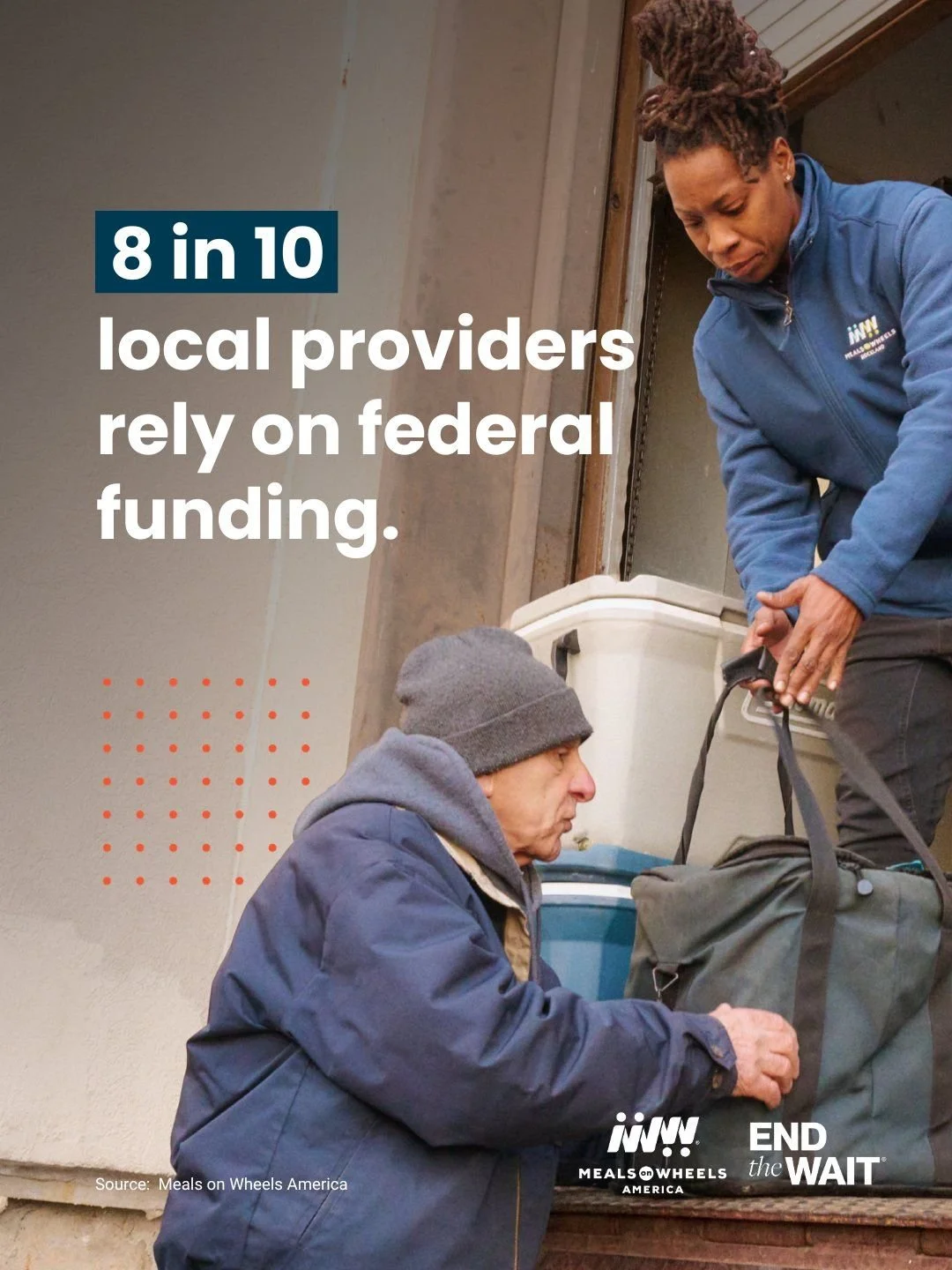
While every local Meals on Wheels organization relies on its own mix of community support - with many depending heavily on local donors and grants rather than federal funds alone - reauthorization provides one additional layer of stability nationwide. It reinforces the principle that older adult nutrition and independence are worthy of national investment.
A Multi-Layered Approach to Care
As the legislation moves to the House of Representatives for consideration, the late-summer recess (August 10 – September 11) provides a timely opportunity for local communities to highlight what older adult hunger relief actually looks like on the ground. Ultimately, no single law or policy can address older adult isolation on its own. It takes a multi-layered network - public policy, local donors, community partners, and dedicated volunteers - working together to ensure our aging neighbors feel valued, supported, and connected.
To read more about this national milestone, view the officialMeals on Wheels America Statement.